

orujov
-
Публикации
9514 -
Зарегистрирован
-
Посещение
-
Days Won
3
Все публикации пользователя orujov
-
уверен - отомстишь.
-
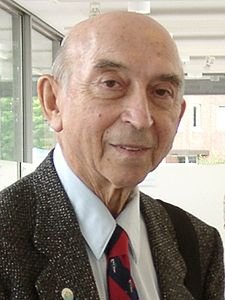
He was born in 1921 in Baku, Soviet Azerbaijan; creator of the concept of "Fuzzy Logic". Fuzzy Logic, an unorthodox theory which he invented which is impacting computer technology. Born of an Azerbaijani father on assignment as a journalist and a mother who was a physician, Zadeh enjoyed a privileged life those early years of his life in Baku. But at the age of ten, when Stalin introduced collectivization of farms throughout the Soviet Union, widespread famine followed, and the Zadeh family moved back to his father's homeland. There he continued his education in English in a private Presbyterian school in Tehran. After high school, he sat for the national university exams and placed second in the entire country. In 1942, he was graduated from the University of Tehran in electrical engineering. During World War II, he moved to the US and took a Master's degree from Massachusetts Institute of Technology (MIT) in 1946 and a Ph.D. from Columbia (New York) in 1949, where he began teaching systems theory. Since 1959, Zadeh has taught at Berkeley, first in the Electrical Engineering (EE) Department where he became Chair in 1963, and later in the Computer Science Division (EECS). Retirement? Since 1991, he's been officially "retired" though it's hard to imagine how he could keep a busier schedule. He still continues to go to his office on campus everyday when in town; but conferences and consultations, often abroad, keep him away, on average, a few days each week. He generally takes the "red-eye" flights to the East Coast, preferring to travel all night because his schedule is too tight to spend much time hanging around in airports and hotels. Lotfi Zadeh, in person, is a lean, quiet, unpretentious, unassuming sort of man. He's often described as extremely gracious - a "gentleman" in the European sense of the word - even by those who don't agree with him. He's methodical, given to details, a "pencil person" (preferring the eraser's tentativeness over pen). During his leisure, he's extremely fond of photography though he used to have more time for it in years past than now. Black and white portraiture (with its fine nuances of grays, of course) is his favorite. He has photographed quite a few famous people himself, including Presidents Truman and Nixon. His original paper on Fuzzy Logic published in 1965 encountered skepticism and, in his words, occasional, downright hostility. Nearly thirty years later, the controversy surrounding Fuzzy Logic is still with us, though not to the same extent. The numerous applications of Fuzzy, especially in J.n, are too visible to be denied. He's gifted with a mind that provides the flexibility to address learned scientists as well as the most unindoctrinated novice by describing scientific principles in concrete tangible examples from everyday life. He tries to best to be accessible to both groups. Although Fuzzy logic has a much longer reach than traditional logical systems, Zadeh is the first to admit that it is not a panacea. "There are and will be many tasks which humans can perform with ease and which lie beyond the c.bility of any computer, any machine and any logical system that we can conceive of to-" How Big is "Fuzzy"? Who knows? Zadeh is too busy pushing forward to keep up with how far the field has expanded. His office in the newly constructed Computer Science Building at Berkeley is stacked floor to ceiling with reprints of articles related to Fuzzy. He believes that people are studying this field in every country which offers advanced education. Twelve journals are now published which include the word "Fuzzy" in their title. An estimated 15,000 articles have been published, although it's hard to be exact as some appear in obscure journals in remote parts of the world. An estimated 3,000 patents have been applied for and 1,000 granted. The J.nese, with 2,000 scientists involved in Fuzzy Logic, have been very quick to incorporate Fuzzy Logic in the design of consumer products, such as household appliances and electronic equipment and one company, Mitsushita (which sells under the name of Panasonic and Quasar) acknowledged that in 1991-1992 alone, they had sold more than 1 billion dollars worth of equipment that used Fuzzy Logic. The concept is so popular there that the English word has entered the J.nese language, though the J.nese pronounce it more like "fudgy" than "fuzzy". Zadeh's intellectual contributions are myriad. He's listed in "Who's Who in the World" and since the late 1980s when the J.nese became interested, the field has expanded exponentially. So, too have the acknowledgments of these contributions with honors such as the esteemed Honda Prize in J.n in 1991, medals, honorary memberships, doctorates, fellowships, editorships, and chairmanships from all over the world. Azerbaijan Republic is among those who have honored him in 1993 when they bestowed an honorary Professorship from the Azerbaijan State Oil Academy. Characteristically, Zadeh is "down-to-earth", always holding abstract scientific concepts up to a reality check of their practical utility of whether they "do us any good." Since the applications of Fuzzy Logic to real life situations are infinite; it's extremely likely that we'll be hearing about Zadeh for a long, long time to come. In 1994 he was inducted as a Fellow of the Association for Computing Machinery. He was awarded the IEEE Medal of Honor in 1995 "For pioneering development of fuzzy logic and its many diverse applications." Zadeh has a long list of achievements, but since 2003, Zadeh has received the following awards. AWARDS * In 1993 Azerbaijan bestowed him an honorary Professorship from the Azerbaijan State Oil Academy. * Outstanding Contribution Award, Web Intelligence Consortium (WIC), Halifax, Canada, 2003. * Wall of Fame, Heinz Nixdorf MuseumsForum (HNF), Paderborn, Germany, 2004. * Civitate Honoris Causa, Budapest Tech Polytechnical Institution, Budapest, Hungary; Sept. 4, 2004. * Doctor Honoris Causa, Muroran Institute of Technology, Muroran, J.n; Oct. 29, 2004. * Doctor Honoris Causa, Hong Kong Baptist University, Hong Kong, China; Nov. 9, 2004. * V. Kaufmann Prize and Gold Medal, International Association for Fuzzy-Set Management and Economy (SIGEF), Barcelona, Spain, Nov. 15, 2004. * Foreign member of the Polish Academy of Sciences, 2005. * Nicolaus Copernicus Medal of the Polish Academy of Sciences, 2005. * J. Keith Brimacombe IPMM Award in recognition of his development of fuzzy set theory and fuzzy logic, 2005. * Doctor Honoris Causa, Universidad Politécnica de Madrid, Madrid, Spain; Jan. 29, 2007. * Richard E. Bellman Control Heritage Award * Doctor Honoris Causa, Ryerson University, Toronto , Ontario, Canada; June 10th 2008.

-
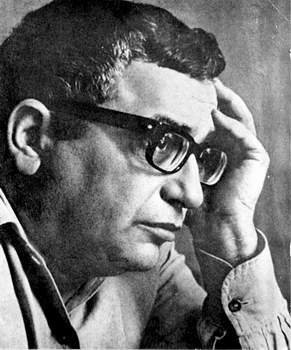
Moskva konservatoriyasında prof. D.D. Şostakoviçin bəstəkarlıq sinfini bitirərkən Q. Qarayevə verilən xasiyyətnamə. 17. IV. 1946.--- Qara Qarayevin böyük və parlaq bəstəkarlıq istedadı var. Ümumi inkişafı son dərəcə yüksək səviyyədədir. Bu musiqi qabiliyyəti və mədəniyyəti olan bəstəkardır. O alətşunaslıq, polifoniya və musiqi sənətinin digər bölümlərinə əla yiyələnmişdir. Qarayev gələcəyi şübhə doğurmayan, daim axtarışda olan bəstəkardır... 1918 – Qara Qarayev fevralın 5-də Bakı şəhərində anadan olub. 1926– Azərbaycan Dövlət konservatoriyası yanında musiqi məktəbinin şagirdi. 1930 – Azərbaycan Dövlət konservatoriyası yanında musiqi texnikumunda (“rabfak” - yeni işçi fakultəsi adlanırdı) professor G.Şaroyevin fortepiano sinfinin tələbəsi. 1935– Azərbaycan Dövlət konservatoriyasında bəstəkarlıq (professor L. Rudolf) və Azərbaycan xalq musiqisinin əsasları (professor Ü.Hacıbəyov) siniflərinin tələbəsi. 1937 – Azərbaycan bəstəkarlar ittifaqının üzvü. 1938 – P. İ. Çaykovski ad. Moskva Dövlət konservatoriyasında 1940-cı ilədək bəstəkarlıq sinfinin (prof. A. N. Aleksandrov) tələbəsi. 1941 – Bakıya qayıdışı. M. Maqomayev ad. Azərbaycan Dövlət filarmoniyasının bədii rəhbəri. 1944 – Azərbaycan Bəstəkarlar Ittifaqının idarə heyəti sədrinin müavini, yenidən 1946-cı ilədək P. İ. Çaykovski ad. Moskva Dövlət konservatoriyasında bəstəkarlıq sinfinin (prof. D. D. Şostakoviç) tələbəsi. 1946 – P. İ. Çaykovski ad. Moskva Dövlət konservatoriyasının məzunu, Azərbaycan Dövlət konservatoriyasında bəstəkarlıq sinfinin müəllimi, “Vətən” operasına görə SSRİ Dövlət mükafatı laureatı, SSRİ Bəstəkarlar İttifaqı təşkilatı komitəsinin üzvü, “Əməkdə igidliyinə görə” medalı ilə mükafatlanıb. 1948 – SSRİ bəstəkarlar İttifaqı idarə heyətinin üzvü, Azərbaycan Dövlət konservatoriyasının dosenti, “Leyli və Məcnun” simfonik poemasına görə Dövlət mükafatı laureatı, Azərbaycan Elmlər Akademiyasının Memarlıq və İncəsənət İnstitutu musiqi bölməsinə başçılığı. 1949 - 1953-cü ilədək Azərbaycan Dövlət konservatoriyasının direktoru. 1952– Azərbaycan Bəstəkarlar İttifaqı idarə heyətinin sədri, sovet mədəniyyət və incəsənət ustalarının bir qrupu ilə Albaniya Demokratik Respublikasına səfər. 1953 – Leninqrad Dövlət Kiçik (“Malıy”) opera teatrında “Yeddi gözəl” baletinin ilk tamaşası. 1956 – 1973-cü ilədək Azərbaycan Bəstəkarlar İttifaqının birinci katibi. 1957 – SSRİ kinematoqraf işçiləri ittifaqının üzvü, “Bir məhəlləli iki oğlan” filminin musiqisinə görə birinci Ümumittifaq sovet filmləri festivalının laureatı, 1962-ci ilədək SSRİ Bəstəkarlar ittifaqı idarə hey’ətinin üzvü. 1958 – Azərbaycan SSR-in xalq artisti, V çağırış SSRİ Ali Sovetinin deputatı, yanvarın 4-də Leninqrad Dövlət opera və balet teatrında "İldırımlı yollarla" baletinin ilk tamaşası. "Uzaq sahillərdə" filminin musiqisinə görə II Ümumittifaq kino festivalının laureatı. 1959 – SSRİ xalq artisti, Ü.Hacıbəyov ad. Azərbaycan Dövlət konservatoriyası bəstəkarlıq kafedrasının professoru, Azərbaycan Elmlər Akademiyasının akademiki, Çexoslovakiyada “Yeddi gözəl” baletinin ilk tamaşaları ilə bağlı yaradıcılıq səfəri (Praqa, Bratislava, Brno şəhərləri). 1961 - “İldırımlı yollarla” baletindən İkinci süitanın ifası ilə bağlı Los-Anjelesdə (ABŞ) I beynəlxalq çağdaş musiqi festivalının iştirakçısı, “Qırmızı Əmək Bayrağı” ordeni ilə mükafatlanıb. 1962 – VI çağırış SSRİ Ali Sovetinin deputatı, P. İ. Çaykovski ad. İkinci beynəlxalq müsabiqənin iştirakçısı, sovet mədəniyyət və incəsənət ustaları arasında ABŞ-a səfər. 1965 – “Antoni və Kleopatra” (V.Şekspir) tamaşına yazdığı musiqiyə görə M. F. Axundov ad. Mükafatın laureatı, aprelin 21-i Moskvada, iyunun 2-i – Bakıda Üçüncü simfoniyanın ilk ifası. 1966 – VII çağırış SSRİ Ali Sovetinin deputatı, dirijorların İkinci Ümumittifaq müsabiqəsində münsiflər heyətinin sədri, sovet mədəniyyət və incəsənət ustaları arasında İspaniyaya səfər, Bakıda “Klassik süitanın” ilk ifası. 1967 - “İldırımlı yollarla” baletinə görə Lenin mükafatı və Lenin ordeni ilə mükafatlanıb. 1968 – aprelin 21 – Qorkidə (indiki Nijni Novqorod), aprelin 28-i – Moskvada Violino ilə simfonik orkestr üçün Konsertin ilk ifaları. 1969 – “Yeddi gözəl” baletinin və “Leyli və Məcnun” simfonik poemasının musiqisinə balet tamaşasının göstərilməsi ilə bağlı Parisdə keçirilən ümumdünya rəqs festivalına səfər, sovet mədəniyyət və incəsənət ustaları arasında Yaponiyaya səfər. 1971 – “Qoyya” filmininə yazdığı musiqi ilə bağlı çəkiliş bölüyü ilə ADR-ə (Almaniya Demokratik Respublikasına) səfər, "Oktyabr inqilabı" ordeni ilə mükafatlanıb. 1978 – Sosialist Əməyi Qəhrəmanı, Ümumdünya müəllif hüquqları agentliyi konqresinin iştirakçısı kimi Parisət səfəri, “Çılğın qaskonlu” müziklinin ilk tamaşası (Moskva operetta teatrı). 1982 – Mayın 13-də Moskva şəhərində dünyasını dəyişib. Bakıda Fəxri Xiyabanda torpağa tapşırılıb.
-
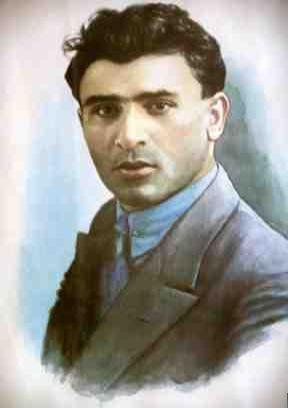
Mikayil Mushfig was born in the city of Baku of Baku Governorate in 5 June 1908. He got his elementary education at Russian-Tatar School in Baku. After the establishment of the Soviet regime in Azerbaijan in 1920, he studied at Baku Teacher's School and in 1931, he graduated from the Department of Language and Literature of the Baku State University. Mikayil started his professional career as a school teacher. While being involved in teaching he started writing poems. His first poem Bir Gün ("The Day") was published in the Ganj fahla newspaper in Baku in 1926. At about this time, he adopted the pen name Mushfig (Arabic for "tender-hearted"). Along with Samad Vurgun and Rasul Rza, Mikayil Mushfig became one of the founders of new Azerbaijani Soviet poetic style in 1930s. He translated a number of poems from Russian as well. In his poetry, Mushfig glorified the work of industrial workers and peasants and lauded the construction of industrial enterprises in Baku and other cities. According to Mushfig's wife, Dilbar Akhundzadeh, Mikayil welcomed the transition from the Arabic script to the Roman script that took place in Azerbaijan in 1927. His excitement was expressed in the following verse [1]: And at parting, My soul wants to tell you: "Goodbye! Your last day has come, Wretched old alphabet!" During the Stalinist purges of 1930s, resisting the state attempts to ban the "tar", Azerbaijani national instrument, Mushfig wrote a poem titled "Sing Tar, Sing". During the Stalinist purges in the USSR, Mikayil Mushfig was arrested and executed on 12 March 1939 in Baku by the Soviet authorities at the age of 30. Published works * Küləklər ("The Winds"), 1930 * Günün Səsləri ("The Voices of the Day"), 1932 * Collection of Poems, 1934 * Selected works (2 volumes), 1960 * Duyğu Yarpaqları ("The Leaves of a Feeling"), 1966 * Poems (2 volumes), 1968 and 1973 * Yenə O Bağ Olaydı ("I wish it was that garden"), 1976 * Ədəbiyyat Nəğməsi ("The Song of literature"), 1978
-
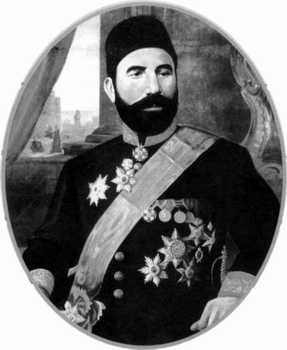
Hajji Zeynalabdin Taghi oglu Taghiyev (Azeri: Hacı Zeynalabdin Tağıyev; Russian: Зейналабдин Тагиев) (25 January 1821–1823, or 1838, Baku – 1 September 1924, near Baku) was born into a poor family of a shoemaker Taghi and his wife Anakhanim in the old part of Baku. After his mother's death and his father's second marriage, he started learning masonry to help provide for his family. His dedication to work ensured quick professional advancement and at 18, he was already a contractor. By mid 1873 along with two companions, he purchased land near the oil-booming town of Bibi-Heybat, a few kilometres to the southeast of Baku. The intention was to discover oil, however all their attempts were in vain. After a while, Taghiyev's companions sold their share to him and returned to Baku. It was not long until oil gushed forth from one of the wells in 1877 leading to Taghiyev's instantly becoming one of the richest men in the Russian Empire. Taghiyev invested his fortune not only in oil business, but also in many other projects such the a textile factory (one of the 28 textile factories functionning in Russia at the time) and industrial fisheries along the shore of the Caspian Sea. He arranged for the construction of a mosque and evening self-education courses for the employees of the textile factory, a school for their children, a pharmacy, a first-aid post and a mill. Altogether his project cost Taghiyev more than 6 million golden roubles. He sold his oil business interest to Anglo-Russian Oil Company for 5 million rubles. In two and a half years, they had earned more than 7.5 million rubles in net profit. It should be mentioned that Taghiyev sold his oil companies in order to diversify into other industries of the Caucasus's economy. He amassed shares in the Oleum Company established on the basis of these enterprises to the amount of 16 million rubles. This allowed him to continue accumulating capital created in the oil sector. During this period, Taghiyev invested significant sums into the textile, food, construction and shipbuilding industries, as well as in fishery. Later, in 1890, Taghiyev bought the Caspian Steamship Company, renovated it and created a fleet of 10 steamboats. Despite the decades of anti-bourgeois Soviet propaganda that followed his lifetime, Taghiyev was remembered by Azeris for his charity work. He sponsored the construction of the first Azeri national theatre in 1883 (known as Taghiyev's Theatre, and later the Azerbaijan State Theatre of Musical Comedy) and helped to repair it after reactionists burned it down in 1909. In 1911, he covered all the expenses for the construction of what would later become the Azerbaijan State Academic Opera and Ballet Theatre. Taghiyev provided 184,000 roubles to build the first secular Muslim school for girls in the Middle East in 1898–1900. He personally obtained the permission to build the school in his correspondence with Empress Alexandra. He also sponsored the construction of a school of agriculture in Mardakan in 1894 and the first technical school in the Baku Governorate in 1911. Taghiyev helped to maintain many city institutions and contributed to the adornment of Baku, including laying out of parks and paving the streets. For this, he provided a 35-year loan of 750,000 roubles to the City Council in 1895. Together with five other businessmen, he financially assisted in establishing horse tramway in Baku, which started functionning in 1892.[4] He helped to solve the water crisis in the city by helping to finance the Shollar water pipeline, which channeled water 100 miles away in the Caucasus Mountains, near Quba, via a ceramic pipeline. Taghiyev allocated 25,000 roubles to have the project completed. The construction of the water pipeline was finished by 1916. In 1886 Taghiyev sponsored the establishement of a fire department in Baku. He provided scholarships for many Azeri youths who strived for higher education in prestigiuous Russian and European universities. Some of them, such as writer Mammed Said Ordubadi, politicians Nariman Narimanov and Aziz Aliyev, professor Khudadat bey Malik-Aslanov, and opera singer Shovkat Mammadova, later rose to prominence. Though illiterate himself, Taghiyev was a proponent of academic enlightenment for the young generations of Azeris. While the clergy created obstacles for the publishing of secularism-oriented literature such as that by Seyid Azim Shirvani, Taghiyev would assist in getting it printed in his private publishing house in Tehran. As a devout Muslim, Taghiyev was in favour of translating the Koran into Azeri. This was vehemently opposed by the local clergy who believed the content of Koran was holy and of divine origin and therefore, no one had the right to translate it. Taghiyev then sent a mullah envoy to Baghdad who came back with an official permission from a board of Muslim scholars to translate the Koran. Taghiyev ordered the necessary equipment from Leipzig and sponsored the translation and the publishing. Taghiyev also allocated 11,000 roubles for the construction of the head office for the Muslim Benevolent Society in Saint Petersburg; 3,000 roubles for the education of Armenian orphans; 5,000 for the St. Nina's School for Girls in Baku; 10,000 roubles for the constuction of the Alexander Nevsky Cathedral in Baku; tens of thousands of roubles for the construction and repair of mosques and madrasas throughout Russia and Persia, etc. For his outstanding contibutions, Taghiyev was twice-awarded with the Order of Saint Stanislaus, as well as with a number of other orders and medals from both Russia and abroad. Taghiyev was married twice. His first wife Zeynab, who was also his cousin, bore him three children. After her death, Taghiyev married Sona, the youngest daughter of General Balakishi Arablinski. The wedding took place in 1896. Arablinski's elder daughter Nurjahan had already been married to Taghiyev's older son Ismayil. Taghiyev sent his daughters Leyla and Sara to study at the prestigious Smolny Institute for Noble Maidens in Saint Petersburg, from where his second wife Sona had once graduated. Taghiyev one year prior to his death, accompanied by his daughter Leyla and his grandchildren Taghiyev one year prior to his death, accompanied by his daughter Leyla and his grandchildren. After Azerbaijan's Sovietization in 1920 the country's wealthy suffered severe repressions from the Bolshevik government resulting in the émigration of many of them. Taghiyev's house and his other possessions were therefore confiscated. Due to his past contributions and generosity, he was given an option of choosing a place of residence for himself. Taghiyev chose to stay in his summer cottage in the village of Mardakan, not far disney. He died there four years later, on 1 September 1924 of pneumonia. After his death, the summer cottage was confiscated and Taghiyev's family members were driven out of it. His wife Sona, once a wealthy, educated and charitable noblewoman of the Caucasus, died in misery on the streets of Baku in 1938. http://en.wikipedia.org/wiki/Haji_Zeynalabdin_Taghiyev
-
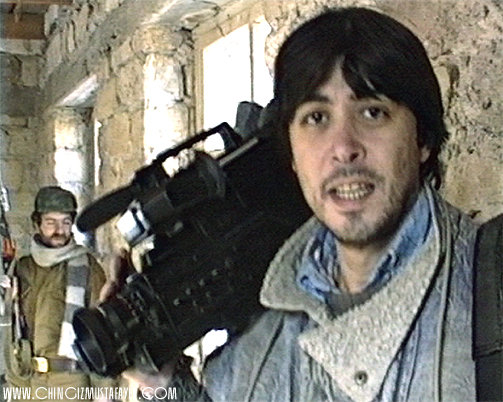
Chingiz Mustafayev (Azerbaijani: Çingiz Mustafayev) (August 29, 1960- June 15, 1992) is a national hero of Azerbaijan, he was one of Azerbaijan's most noted journalists, even though the corpus of his work spans less than a year. With no formal journalistic training, he created a video anthology of the Karabakh war - documenting the brutality of a war that ultimately cost his own life. Main article: Khojaly Massacre He was the man behind the TV camera, who filmed the scene of Khojaly Massacre in 1992. To make the footage Chingiz had to travel on an army helicopter, and despite coming under fire he managed to film the evidence of the Khojaly Massacre showing hundreds of dead bodies strewn across snow-covered fields.[1] The pictures are accompanied by the sound of Chingiz’ – no stranger to the sight of corpses – sobbing uncontrollably as he filmed. Azerbaijan's official media had covered up the fact that the town had been wiped out and women, children and the elderly had been slaughtered. But his film was the irrefutable evidence that there had had been a full-scale massacre, in perpetration of which Human Rights Watch and Russian Memorial society blamed the Armenian forces. In the course of eight months, Chingiz shot 18 documentaries about the war in Karabakh, leaving behind a substantial historical archive. Today Chingiz is known for his patriotic work, he is considered to have risked everything to expose the truth. On 15 June 1992, aged not quite 32, Chingiz himself was hit, while filming an exchange of fire between Azerbaijani and Armenian forces near the village of Nakhichevanik. According to his brother Vahid Mustafayev, he was fatally wounded when a shell exploded right beside him and a splinter from the shell severed one of his major arteries. By the time Chingiz was delivered to the hospital, he died of blood loss. His last moments were captured on his own camera.[2] On the other hand, some sources claim that details of his killing were not available and that before his death he reportedly was gathering data alleging that the Armenian attack against civilians in Khojaly was a provocation by the Azerbaijani National Front to force the resignation of Azerbaijani president Ayaz Mutalibov. [1] ANS CM 102 FM the first Radio Broadcasting Company in the Caucasus was called in his honor and the slogan of this station is “We are fated to struggle”. Many organizations and foundations were named after him. A foundation has been established in honour of Chingiz Mustafayev by ANS for the purposes of arranging journalist contests in various nominations, its called; Chingiz Mustafayev Foundation (Çingiz Mustafayev adına Fond in Azerbaijani).
-
Early life Muslim Magomaev represented one of the most respected artistic dynasties in Azerbaijan. His grandfather Muslim Magomayev (1885-1937), a friend and contemporary of the prominent Azerbaijani composer Uzeyir Hajibeyov, was one of the founders of Azerbaijani-composed music. Magomaev's father, Mahammad Magomaev, who died during World War II, was a gifted Scenic designer, and his mother was an actress. Muslim learned to play a piano as a child, and began to take lessons from teachers of voice at the age of 14. He finished the piano and composition class of the musical school at Baku Conservatoire, and then graduated from the vocal class of Baku conservatoire. As a teenager he became interested in Italian songs, American jazz and other styles of popular music Musical career In 1962, at the age of 20, Magomaev first appeared in Moscow where he performed within the frameworks of the Days of Azerbaijani Culture. He sang two musical pieces in a gala-concert on the USSR's main stage, the Kremlin Palace of Congresses, and became a celebrity on a spur of the moment. A year later he gave his first solo concert in the Moscow Tchaikovsky Concert Hall to a full house and became a soloist of the Azerbaijan State Academic Opera and Ballet Theatre. Muslim earned fame in the USSR as an opera singer with Rossini's "Barber of Seville". He also became known for his arias from Puccini's "Tosca", Hajibeyov's "Koroghlu" and "Shah Ismayil", which was composed by his grandfather. In 1964 – 1965 Muslim was on probation in the La Scala theatre in Milan, but turned down the invitation to sing in the Moscow Bolshoi Theater upon his return. Instead, the singer turned to popular music, becoming a pop idol for several generations of music lovers in the Soviet Union. Muslim Magomaev's popularity in the USSR was overwhelming. He quickly became a cult figure and gave three concerts a day filling out huge arenas all across the Soviet Union, while his albums sold millions. In 1966 and 1969 Magomaev performed in Paris Olympia with great success. The director of Olympia Bruno Coquatrix offered him a contract, and Magomaev was seriously considering an opportunity to pursue international career, but Ekaterina Furtseva refused to grant the Ministry of Culture's permission, claiming that it needed Magomaev to perform at governmental concerts. In 1969 he received MIDEM Gold Disc Award in Cannes for the album sales of over 4,5 million units. In 1973, at the very young age of 31, Muslim was awarded the Soviet Union's highest artistic title: People's Artist of the USSR. Magomaev was also known as a composer, writing several film soundtracks. In addition, Magomaev acted in films and hosted television and radio broadcasts devoted to prominent musicians of the 20th century. Magomaev moved to Moscow in the early 1970s, where he worked in theater. In 1997, in recognition of Magomaev's professional successes, a Russian astronomical society named two planetoids of the solar system in honor of him and his wife, Tamara Sinyavskaya, a prominent Russian opera singer who was also awarded People's Artist of the USSR and worked as a soloist at the Bolshoi Theater. From 1998 Magomayev officialy stop his musical career and had only few performances with his wife. The famous singer died on October 25, 2008 in Moscow, in his own flat from heart problem. He is going to be buried in Baku on October 29 at 16:00 in 1st Fakhri Khiyaban ----------------------------- Ушел из жизни известный певец Муслим Магомаев, сообщает телеканалы Артист скончался на 67-м году жизни. Муслим Магометович Магомаев родился 17 августа 1942 года в Баку. Учился в музыкальной школе при Бакинской консерватории по классу фортепиано и композиции, окончил Азербайджанскую консерваторию по классу пения Ш. Мамедовой (1968). Всесоюзная известность пришла после его выступления в Кремлевском Дворце съездов на заключительном концерте фестиваля азербайджанского искусства в 1962 году. Первый сольный концерт Магомаева состоялся 10 ноября 1963 года в концертном зале имени Чайковского. В 1963 году Магомаев становится солистом Азербайджанского театра оперы и балета им. Ахундова, продолжает выступать на концертной эстраде. В 1964-1965 годах стажировался в миланском театре "Ла Скала", в 60х годах выступает в крупнейших городах Советского союза в спектаклях "Тоска" и "Севильский цирюльник". В 1966 и 1969 годах с большим успехом прошли гастроли Магомаева в знаменитом театре "Олимпия" в Париже. В 1969 году на фестивале в Сопоте Магомаев получает I премию, а в Каннах - "Золотую пластинку". В 1973 году ему было присвоено звание Народного артиста СССР, минуя звание Народного артиста АзССР. С 1975 по 1989 годы Магомаев был художественным руководителем созданного им Азербайджанского государственного эстрадно-симфонического оркестра, с которым много гастролировал по СССР. В концертном репертуаре Магомаева более 600 произведений (русские романсы, классические, эстрадные и неаполитанские песни). Он снялся в фильмах: "Низами", "Поет Муслим Магомаев" и "Москва в нотах". Магомаев автор более 20 песен, музыки к фильмам. Он также автор и ведущий цикла телепередач о жизни и творчестве американского певца Марио Ланца, написал книгу об этом певце. В 1997 г. его именем 4980 Magomaev названа одна из малых планет Солнечной системы, известная астрономам под кодом 1974 SP1. В последнее время Муслим Магомаев жил в Москве, время от времени выезжая на гастроли в города бывшего Союза и за рубеж. Муслим Магомаев скончался 25 октября 2008 года в возрасте 66 лет после продолжительной болезни.
-
Mammed Amin Rasulzade (Azerbaijani: Məhəmməd Əmin Axund Hacı Molla Ələkbər oğlu Rəsulzadə, Turkish: Mehmed Emin Resulzade; January 31, 1884, Novkhana, near Baku—March 6, 1955, Ankara) was an Azerbaijani statesman, scholar, public figure and one of the founding political leaders of Azerbaijan Republic (1918-1920). His expression "Bir kere yukselen bayraq, bir daha enmez!" ("The flag once raised will never fall!") has become the motto of the independence movement in Azerbaijan in the 20th century. LIFE Mammad Amin Rasulzade received his education at the Russian-Muslim Secondary School and then at the Technical College in Baku. In his years of study he created "Muslim Youth Organisation Musavat", first secret organisation in Azerbaijan's contemporary history, and beginning from 1903 Rasulzade began writing articles in various opposition newspapers and magazines. At that time, his anti-monarchist platform and his demands for the national autonomy of Azerbaijan, aligned him with Social Democrats and future Communists. In 1904 he founded the first Muslim social-democrat organisation "Hummet" and became editor-in-chief of its newspapers, "Tekamül"(1906-1907) and "Yoldaş"(1907). Rasulzade also published many articles in non-partisan newspapers such as "Hayat", "Irshad" and also "Fuyuzat" journalOCLC 50542738. His dramatic play entitled "The Lights in the Darkness" was staged in Baku in 1908. Rasulzade and his co-workers were representatives of the Azerbaijani bourgeois intelligentsia. Most of them, including Rasulzade himself, had been members of the Baku organization of the Russian Social-Democratic Workers' Party (Bolsheviks) in 1905. A photograph is extant in Soviet archives, showing Rasulzade with Prokopius Dzh.ridze and Meshadi Azizbekov, Bolsheviks who later became famous as two of the 26 Baku Commissars shot during the civil war. During the First Russian Revolution (1905-1907), Rasulzade actively participated in revolutionary developments. As the story goes, it was Rasulzade who saved young Joseph Stalin in 1905 in Baku, when police were searching for the latter as an active instigator of riots. In 1909, under the persecution from Tsarist authorities, Rasulzade fled Baku to participate in the Constitutional Revolution of 1905-1911. While in Persia, Rasulzade edited Iran-e Azad newspaper, became one of the founders of Democratic Party of Iran and began publishing its newspaper Iran-e Nou. In 1911, Rasulzade also published his book "Saadet-e bashar" ("Happiness of Mankind") in defense of the revolution. After Russian troops entered Iran in 1911 and, in cooperation with British, assisted Qajar Court to put an end to Iranian Constitutional Revolution, Rasulzade fled to Istanbul, then capital of Ottoman Empire. Here, in the wake of Young Turk Revolution, Rasulzade founded a journal called Türk yurdu (The Land of Turks), in which he published his famous article "İran Türkleri" ("The Iranian Turks"). The Musavat Party and Azerbaijan Democratic Republic After the Amnesty Act of 1913, dedicated to the 300th anniversary of the Royal Romanov Dynasty, Rasulzade returned to Baku, left the Hummet party he was previously member of, and joined the then secret Musavat (Equality) party in 1913, established in 1911, which initially promoted pan-Islamist, pan-Turkist and Socialist ideas, or more precisely Pan-Islamism yet with affinity for greater cultural bonds with the Turkic world, and which eventually became Azerbaijani nationalist party, and quickly became its chief. In 1915 he started to publish party's newspaper "Açıq Söz" (Open word) which lasted till 1918. When February Revolution happened, Musavat together with other secret political parties in Russian Empire quickly legalized and became a leading party of Caucasian Muslims after it merged with Party of Turkic Federalists headed by Nasibbey Usubbeyli. October revolution in 1917 lead to secession of Transcaucasia from Russia and Rasulzade became head of Muslim faction in the Seym, parliament of Transcaucasian Federation. After the dissolution of the Transcaucasian Federation Muslim faction re-organized into Azerbaijani National Council, whose head Rasulzade was unanimously elected in May 1918. On May 28, 1918, the Azerbaijani National Council, headed by Rasulzade, declared an independent Azerbaijan Republic. And even though Rasulzade never held any governmental post in either of the Cabinets of Ministers, as an active member of the Parliament he remained a kind of ideological leader of the newly-formed state until its collapse in May 1920. Rasulzade also initiated the establishment of Baku State University together with Rashid khan Kaplanov, minister of education with the funding of oil baron Haji Zeynalabdin Taghiyev in 1919. Rasulzade taught Ottoman literature at the University. After the collapse of Azerbaijan Democratic Republic in April 1920, Rasulzade left Baku and went into hiding in the mountainous village of Lahij to direct the resistance to Sovietization, but in August 1920, after Soviet Russian army crashed the rebellions of Ganja, Karabakh, Zagatala and Lankaran, lead by ex-officers of the Azerbaijani National Army, Rasulzade was arrested and brought to Baku. It was only due to his earlier rescue of Joseph Stalin in 1905, that Rasulzade was released and transferred from Azerbaijan to Russia. For the next two years, Rasulzade worked as the press representative at the Commissariat on Nations in Moscow. He was seconded to Saint Petersburg in 1922 from where he escaped to Finland. EXILE For the rest of his life, Rasulzade settled as an exile first in Turkey. However, the 1931 suppression of the emigre publications[citation needed] coincided with Rasulzade's expulsion from Turkey, and some saw it as the result of caving in to Soviet pressure. In reality, the reason went deep into the complex relationship between Turkey and Azerbaijan. Tensions had been growing toward the end of the decade, and by 1930, they had reached a boiling point. In reply to Turkish criticism that the Musavat was neglecting the cause of Turkic unity, Rasulzade published a pamphlet titled O Pantiurkizme v sviazi s kavkazskoi problemoi (Pan-Turkism with regard to the caucasian problem), in which he firmly stated his view: Pan-Turkism was a cultural movement rather than a political program.[13] Thus, he went to Poland in 1938, where he met his wife, Vanda, niece of Polish statesman Józef Piłsudski,[14] then to Romania in 1940. During World War II he went to Berlin and met with Azeri POWs in attempt to encourage them to help Nazi Germany, although the mission proved insuccessful[15]. Finally, after World War II, he went back to Ankara, Turkey in 1947, where he participated in the politics of the marginal Pan Turkic movement.[16] Due to sensitivity of his presence in either Turkey or Iran, and being often exiled, Rasulzade "cherished bad memories of both Iran and Turkey".[17] In his appeal to Azerbaijani people in 1953 through Voice of America, he stressed his hope that one day it will become independent again.[18] He died in 1955, a broken man according to Thomas Goltz,[16] and was buried in Cebeci Asri cemetery in Ankara. MAJOR WORKS Rasulzades works include: The lights in a darkness. (play, 1908, not published) The critic of the party of Etidaliyyun. Teheran, 1910 (in Persian) The happiness of the mankind (Saadet-e basher). Ardebil, 1911 (in Persian) An unhappy life (Aci bir hayat). Baku, 1912 Two views on the form of government (together with Akhmet Salikov). Moscow, 1917 Role of Musavat in the formation of Azerbaijan. Baku, 1920 Azerbaijan Republic: characteristics, formation and contemporary state. Istanbul, 1923 Sayavush of our century. Istanbul, 1925 Caucasian Turks. Istanbul, 1928 Panturanism in regard with the Caucasian problem. Paris, 1930 (in Russian), reprinted with an English introduction in 1985 in Oxford About Azerbaijani Republic. Berlin, 1933 (in German) Azerbaijan problem. Berlin, 1938 (in German) Azerbaijan’s struggle for independence. Warsaw, 1939 (in Polish) Azerbaijan’s cultural traditions. Ankara, 1949 Contemporary Azerbaijani literature. Ankara, 1950 Contemporary Azerbaijani history. Ankara, 1951 Great Azerbaijani poet Nizami. Ankara, 1951 National Awareness. Ankara, 1978
-
точно.
-
и так, у нас вырисовывается круг пограничников. командир погран части и старший сержант Амелия и Зарина соответственно. но все еще впереди.
-
окружающие, по большей части, будут относится ровно также как ты сам относишся к себе и к ним.
-
на второе у меня грудинка с фри. а зачем вы спрашиваете?
-
нуу, чего уж тут непонятного. на первый взгляд все ясно..
-
мордобой. Алиев + власть =
-
в школьном классе называли шериф, не понятно как прилипло. после школы, как родители назвали, так все и зовут, исключение один человек, зовет по сей день "мой коуч", я не против, мне нравится.
-
Орхан, вопрос вообще то исключительно про форум)) с твоих слов выходит что я на форуме "не приведи господь"? ))
-
вопрос на миллион.
-
интанелла, привлекательная у вас свобода тела..
-
занимательный тест. http://frontiers.manwb.ru/ вот мой результат: Границы во внутреннем мире 25% Границы кругозора и познания 10% Границы, поставленные другими людьми 25% Границы, поставленные мной по отношению к другим людям 30% Границы активной жизненной позиции 30% Границы психики 45% Границы физического тела 45% Приведенная диаграмма («0%» - никаких границ, «100%» - полная ограниченность) покажет, как распределились результаты по семи типичным для современного человека ограничениям. Не забудьте, что результат любого теста – не диагноз, а лишь повод для размышления. Комментарии к тесту: 1. Границы внутреннего мира Границы внутреннего мира появляются тогда, когда человек по каким-то причинам не позволяет себе мечтать, боится во что-то верить, когда большое количество важных и не очень дел, суета и усталость не дают возможность остановиться и поразмыслить, а ради чего я это делаю. Из-за ограничений подобного рода можно всю жизнь быть чем-то занятым, но при этом ощущать бессмысленность, пустоту. А можно и попросту пройти мимо своего предназначения. 2. Границы кругозора Вместо того чтобы узнавать что-то новое, мы часто прячемся за привычными убеждениями. Но с опытом возникает желание пересмотреть свои взгляды, что-то поменять в них. Ведь мы и сами меняемся. Человек с широким кругозором понимает, что в любом критическом замечании есть здоровое зерно, которое надо использовать, чтобы чему-то научиться. Понимает, что нельзя отрываться от корней и перечеркивать все жемчужины прошлого. Понимает, что позиция консерватора, который ничего не хочет знать о современности, хуже скафандра и мешает жить. Сильно ограничивает наш кругозор нежелание узнавать, прислушиваться к разным мнениям, нелюбознательность, когда внутри не возникает вопросов, а значит не находится и ответов на них. Люди с такими ограничениями идут по миру с закрытыми глазами и ушами. Как много они пропускают. 3. Границы, поставленные другими людьми Несвободным может сделать человека и экономическая зависимость, и обидчивость, и желание казаться хорошим. Большую роль в нашей жизни играет общественное мнение и точка зрения тех, кто старше и выше. Часто все это мешает задуматься о том, какой я на самом деле, и так ли важно, что в данный момент обо мне думают окружающие. Эти границы диктуют, где надо работать, где и с кем жить, как одеваться и многое, многое другое, мешая людям оставаться самим собой в разных ситуациях. 4. Границы, поставленные мной по отношению к другим людям Как сильно мешают нам жить стереотипы: национальные, религиозные, расовые и т.д. Другая культура, другие правила, другие взгляды и человек уже перестал для нас существовать, а вы, быть может, перестали существовать для него. Как тяжело научиться легкости и простоте в общении с любым человеком, умению сохраняя собственное достоинство, уважать других и видеть в них лучшее. Не умение терпимо относиться к окружающим людям – это тоже ограничение, которое сильно осложняет нашу жизнь. 5. Границы активной жизненной позиции От самого человека зависит, займет ли он активную позицию, по отношению к тому, что происходит, или будет считать это результатом случая, ошибками других людей, невезением. Как часто по этой причине мы не замечаем и упускаем шанс что-то изменить в своей жизни. Почти доходим до цели и опускаем руки, а потом удивляемся, что у других получается. Эти ограничения мешают реализоваться всем нашим потенциалам и воплотиться замыслам. 6. Границы психики Широко известен стереотип, что эмоциональность украшает человека, а характер нельзя изменить. Однако, излишняя эмоциональность тоже может стать своего рода ограничением, равно как и неспособность контролировать свои мысли. Проблема возникает тогда, когда сам человек становится зависимым от своих эмоций, чувств и мыслей, а не наоборот. В конце концов: кто в доме хозяин? 7. Границы физического тела Где границы наших физических и физиологических возможностей? Мы отодвигаем их год за годом, взрослея и набираясь жизненного опыта. Невозможное вчера становится реальным сегодня и пройденным этапом завтра. Самое главное – не поддаться иллюзии невозможности преодолеть физические ограничения. Человек стареет, когда говорит «не могу». В заключение хотелось бы заметить, что далеко не все «границы» нам мешают. Человек не может и не должен быть полностью свободным. Ведь есть границы, ограничения, стереотипы – а есть узы, связи, ответственности, долг: то, что нам очень и очень необходимо
-
ТемнаЯЯЯ!!!! с днем рождения тебя!!!! и со всеми другими праздниками!!!!
-
пурик, разреши поздравить тебя с днем рождения и пожелать чтобы все сбылось))
-
Эльчин, спасибо. про Узеира знал, про отца учту в следующем году. а вообще, одна дубленка, лучше тысячи слов, это так ... на будущее..
-
 У вас антироссийское настроение? где вы их прочли? между какими строчками?
 -
вы хотите вступить со мной в спор? или просто вырвалось?
-
из армянских такси высаживаюсь, неизвестно кому и как аукнутся заплаченные мной деньги.